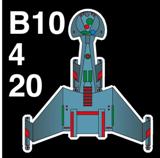
Has anyone else felt that the BC needs to be pinned to the neck? Or do we think it'll hold with simply with glue and putty?

Thanks,
---Guy
Moderators: Albiegamer, mjwest




Beware: The BC saucer (IIRC - I;m at work right now and not in front of my minis) has "ridges" on the top of the dorsal neck in addtion to any flash that may be present. Those ridges fit into the grooves /weld lines / shield grid on the underside of the saucer to prevent unslightly gaps from appearing when assembled.djdood wrote:I've noticed the resin ships' dorsal necks will have a tiny bit of "flash" on their upper face. Make sure to file that away so the "pegs" are clear and nothing interferes with their fit-up into the corresponding "holes" in the saucer.
 ), but they won't match since the grid lines pop OUT on the Zocchi and they are recessed on the 2500s. Hopefully, this will work out to "Average" the two out I'll certainly keep you posted!